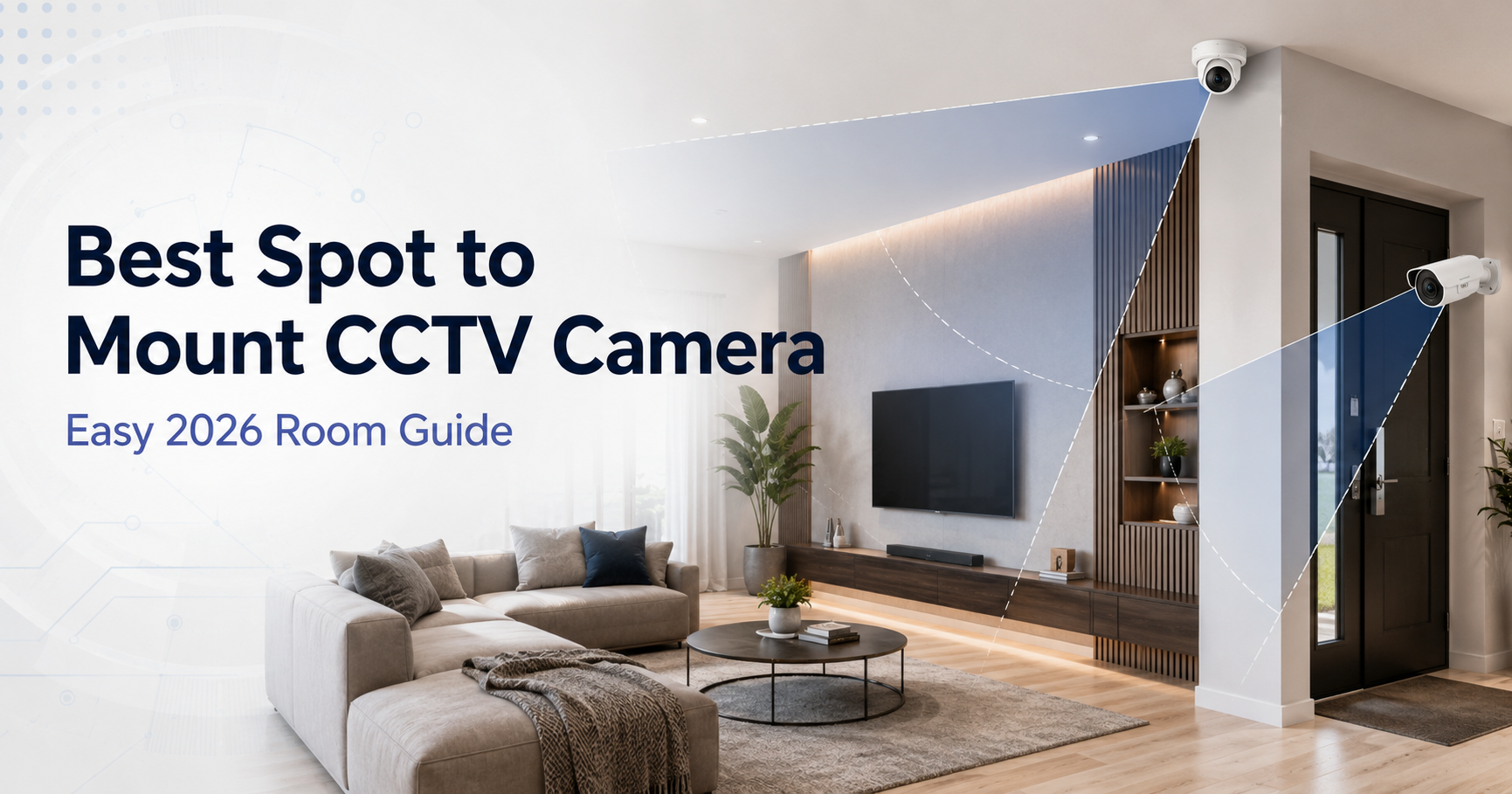
Best Spot to Mount CCTV Camera: Easy 2026 Room Guide
Buying good cameras is only half the job — the best spot to mount CCTV camera placement makes the real difference in whether footage is actually useful when you need it. Poor…
Buying good cameras is only half the job — the best spot to mount CCTV camera placement makes the real difference in whether footage is actually useful when you need it. Poor placement leads to blind spots, glare, or footage too distant to identify anyone. Here’s where to put cameras for the best coverage around a typical Wellington home, and the mistakes that quietly ruin otherwise good systems.
Best Spot to Mount CCTV Camera: Why Placement Beats Quality
A high-resolution camera pointed at the wrong angle is still practically useless. The best spot to mount CCTV camera choice balances three things: a clear, unobstructed sightline, protection from tampering, and coverage of the areas most likely to matter — entry points, not just wide open spaces. Netsafe and general NZ Police home safety guidance both emphasise that visible, well-positioned cameras act as a genuine deterrent, but only when they’re actually capturing usable footage of the areas an intruder would use.
Front Door and Entryway: A Top Best Spot to Mount CCTV Camera Units
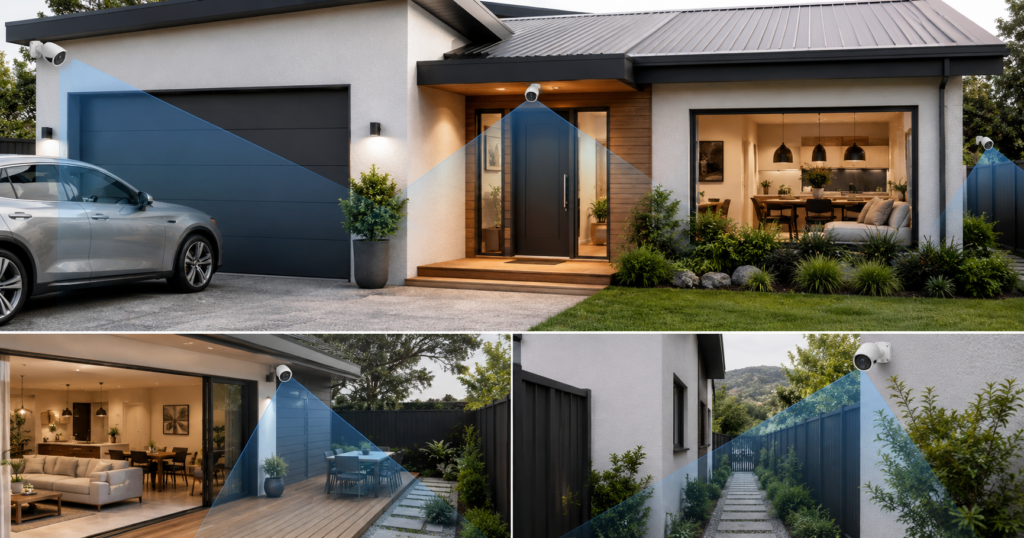
The front door is the single most important best spot to mount CCTV camera units in almost any home. Mount it at 7–9 feet high, angled slightly downward, so it captures faces clearly without being easy to reach or knock out of alignment. Avoid pointing it directly into the path of the morning or evening sun, which causes glare and washed-out, unusable footage during exactly the hours when visibility matters most.
If you’re adding a video doorbell alongside a full CCTV system, make sure the two don’t create an unnecessary blind spot between them — they should complement each other’s coverage, not just duplicate the same angle.
Driveway and Garage
A driveway camera should ideally cover the full width of the space, including any vehicle parked there, plus a portion of the street or footpath approach. Mounting on a corner of the house, rather than directly above the garage door, usually gives a wider and more genuinely useful angle across the whole driveway rather than a narrow, straight-down view.
For homes with a shared or narrow driveway — common in older Wellington sections — a slightly wider-angle lens can make a meaningful difference in what’s actually captured.
Back Door and Side Gates
Back doors and side gates are common secondary entry points and are often under-covered compared to the front of a property. A camera here should be positioned to capture anyone approaching the door itself, not just the door frame, giving enough lead time in footage to identify a person before they reach the entry point.
Backyard and Ground-Floor Windows
For backyards, a slightly elevated, wide-angle camera covering the main access path generally works better than trying to cover an entire yard with a single unit stretched too thin. Ground-floor windows, especially those hidden from street view by fencing or hedging, are worth a dedicated camera in higher-risk areas, since they’re often the point of entry attempted first.
Indoor Common Areas
If you’re placing cameras indoors, hallways and entry foyers are the most useful spots — they capture anyone moving through the home rather than being limited to a single room’s activity. Avoid pointing indoor cameras at bedrooms or bathrooms, both for privacy reasons and because footage from these areas is rarely useful for security purposes anyway.
Height and Angle Guidelines for the Best Spot to Mount CCTV Camera Units
| Location | Recommended Height | Angle Notes |
| Front door / entry | 7–9 feet | Slight downward angle, avoid direct sun glare |
| Driveway / wide areas | 9–10 feet | Wider field of view, corner-mounted |
| Back door / side gate | 7–9 feet | Capture approach path, not just the door |
| Indoor hallway | 7–8 feet | Corner-mounted where possible |
Mounting too high reduces facial detail in footage; mounting too low makes cameras easy to tamper with, obscure, or vandalise — both extremes undermine the whole point of the system.
Mistakes to Avoid When Choosing the Best Spot to Mount CCTV Camera Units
- Pointing directly at the sun’s path. Causes glare during sunrise or sunset that can render footage useless for hours each day.
- Mounting within easy reach. Cameras under 7 feet are easy to disable, spray-paint over, or simply turn aside.
- Leaving gaps between camera coverage. Walk your property boundary and check for blind spots between each camera’s field of view before finalising positions.
- Ignoring night coverage. Check that infrared range actually reaches the areas you care about in practice, not just the camera’s rated theoretical distance on the box.
- Aiming into neighbouring properties. This can raise genuine privacy concerns and is generally worth avoiding both as good practice and to prevent disputes.
- Forgetting seasonal changes. Foliage that’s sparse in winter can fully obscure a camera’s view once trees and hedges are in full leaf later in the year.
Should You DIY Camera Placement or Get a Professional Assessment?
DIY placement often looks fine until footage is actually needed after an incident — that’s precisely when gaps in coverage or bad angles become obvious, and by then it’s too late. Finding the best spot to mount CCTV camera units yourself is possible, but a professional walkthrough accounts for your property’s specific layout, lighting changes throughout the day, and realistic sightlines — genuinely hard to judge from the ground while holding a single camera in your hand. It’s also the point at which decisions about hardwired vs WiFi security cameras and overall CCTV installation cost tend to get finalised, since camera count and placement directly affect both.
Lighting and Its Effect on Camera Placement
Good positioning isn’t only about angle and height — lighting conditions around each camera location matter just as much. A camera facing a bright security light at night can end up with a washed-out image immediately in front of the lens while everything behind it stays dark, defeating the purpose of the light in the first place. Where possible, position cameras so any external lighting illuminates the scene from behind or beside the camera, not directly into it. For areas without existing lighting, pairing a camera with a motion-activated light can both improve footage quality after dark and add a second layer of deterrence.
Coverage Overlap Between Cameras
For multi-camera systems, a small amount of overlap between each camera’s field of view is worth planning for deliberately. This overlap means that if one camera’s view is partially obstructed — by a parked car, new landscaping, or a closed gate — an adjacent camera can still capture activity in that same general area. Relying on a single camera per zone with no redundancy is a common reason coverage gaps only get noticed after they matter.
Adjusting Placement Seasonally
Because outdoor cameras are exposed to New Zealand’s changing seasons, it’s worth revisiting camera angles roughly twice a year. Growing hedges, deciduous trees losing or regaining leaves, and even seasonal changes in sun position can all gradually shift what a camera actually sees compared to when it was first installed. A five-minute check each season — comparing a fresh snapshot to the original installation photo — is enough to catch drift before it becomes a real blind spot.
Key Takeaways
- The best spot to mount CCTV camera units is almost always the front door, driveway, and back entry points — prioritise these first.
- Mount outdoor cameras at 7–9 feet, angled to avoid direct sun glare during sunrise and sunset.
- Avoid gaps between camera fields of view — walk the property boundary to check.
- Seasonal changes like tree growth can obscure cameras that had clear sightlines when installed.
- A professional site assessment catches placement issues that are easy to miss doing it yourself.
Frequently Asked Questions
How many cameras do I need to cover a typical home?
Most homes are well covered with 4–6 cameras placed at the best spot to mount CCTV camera locations: front door, driveway, back door, and one or two covering side access points.
Should CCTV cameras be visible or hidden?
Visible cameras act as a deterrent, which is why most homeowners place at least the front-facing cameras in clear view, while covering blind spots with less obvious secondary placements.
Can I mount CCTV cameras myself?
Yes, though getting the height, angle, and cable routing right without gaps takes some planning — a professional assessment is worth it for genuinely full-property coverage rather than a rough approximation.
How high should an outdoor CCTV camera be mounted?
Generally 7–9 feet is the sweet spot — high enough to avoid tampering, low enough to still capture clear facial detail of anyone approaching.
Do I need different cameras for daytime and night-time coverage?
Not necessarily — most modern cameras include infrared night vision, but it’s worth checking the rated night-vision distance actually covers the areas you care about after dark, not just during the day.
What’s the most commonly missed spot when people set up their own CCTV?
Side gates and ground-floor windows are the most frequently overlooked, since attention naturally goes to the front door and driveway first.
Want your cameras positioned for maximum coverage the first time? Book a CCTV installation assessment with S-Tech Services and get expert placement for every entry point around your home.
Related Posts