What Is Structured Data Cabling? Complete Guide for NZ Businesses (2026)
What Is Structured Data Cabling? Structured data cabling is a standardized system of cables, connectors, patch panels, and hardware that supports your business’s IT infrastructure — including internet, phones, WiFi, CCTV, security…
Table of Contents
- What Is Structured Data Cabling?
- Why Structured Data Cabling Is Important for NZ Businesses
- Components of a Structured Cabling System
- Types of Structured Cabling Used in New Zealand
- NZ Standards & Compliance (2026 Update)
- How Much Does Structured Data Cabling Cost in NZ? (2026)
- Signs Your Business Needs Structured Cabling Upgrade
- Benefits of Structured Cabling for NZ Businesses
- Structured Cabling for Different Industries in NZ
- Structured Cabling vs Point-to-Point Cabling
- How Long Does Installation Take?
- Should You DIY Structured Cabling?
- Choosing the Right Structured Cabling Company in NZ
- Final Thoughts: Is Structured Data Cabling Worth It in 2026?
- FAQs – Structured Data Cabling NZ
- Need Professional Structured Data Cabling in NZ?
What Is Structured Data Cabling?
Structured data cabling is a standardized system of cables, connectors, patch panels, and hardware that supports your business’s IT infrastructure — including internet, phones, WiFi, CCTV, security systems, and cloud applications.
Instead of running separate cables for every device, structured cabling creates an organised, scalable network that keeps your business connected efficiently and safely.
For New Zealand businesses in 2026, reliable data cabling is no longer optional — it’s essential.
Why Structured Data Cabling Is Important for NZ Businesses
Modern businesses rely on:
- Cloud software (Xero, Microsoft 365)
- VoIP phone systems
- CCTV & security systems
- Smart access control
- High-speed fibre internet
- Hybrid and remote work systems
Poor cabling leads to:
- Slow internet speeds
- Network downtime
- Frequent IT issues
- Safety hazards
- Expensive troubleshooting
A properly installed structured cabling system ensures:
✔ Faster data speeds
✔ Better reliability
✔ Future scalability
✔ Compliance with NZ standards
✔ Cleaner and safer installations
Components of a Structured Cabling System
A complete structured cabling system typically includes:
1. Data Cables
Most common types in NZ:
- Cat5e (basic use)
- Cat6 (standard for offices)
- Cat6A (higher speed & future-proof)
- Fibre optic cabling (high-performance & large offices)
2. Patch Panels
Central termination point where cables connect to network switches.
3. Network Switches
Distribute internet/data to devices.
4. Racks & Cabinets
Keep equipment organised and secure.
5. Data Outlets
Wall points for computers, phones, printers, WiFi access points.
Types of Structured Cabling Used in New Zealand
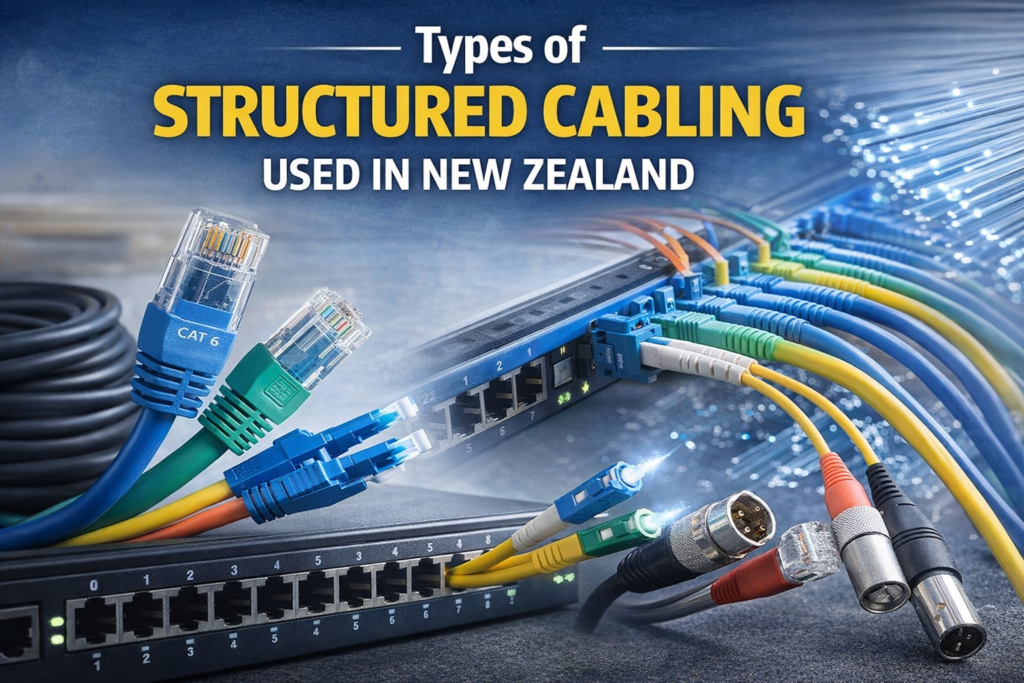
Copper Cabling
- Affordable
- Ideal for small to medium businesses
- Typically Cat6 or Cat6A
Fibre Optic Cabling
- Extremely fast
- Best for large commercial buildings
- Required for high data usage
Most NZ commercial buildings use a combination of both.
NZ Standards & Compliance (2026 Update)
Structured cabling installations in New Zealand must comply with:
- AS/NZS 3080 (Telecommunications installations)
- AS/NZS 3000 (Wiring Rules)
- Building Code requirements
- Health & Safety at Work Act 2015
Only qualified and experienced installers should handle commercial data cabling projects.
How Much Does Structured Data Cabling Cost in NZ? (2026)
Pricing depends on:
- Size of premises
- Number of data points
- Cable type (Cat6 vs Fibre)
- Accessibility
- Fit-out stage (new build vs retrofit)
Estimated NZ Pricing Guide (2026)
| Service | Estimated Cost (NZD) |
|---|---|
| Cat6 Data Point Installation | $150 – $250 per point |
| Small Office (10–20 points) | $2,000 – $5,000 |
| Medium Office Fit-Out | $5,000 – $15,000 |
| Fibre Backbone Installation | Custom Quote |
Note: Prices vary depending on location and building type.
Signs Your Business Needs Structured Cabling Upgrade
- Frequent internet dropouts
- Messy visible cables
- Slow file transfers
- Expanding staff or devices
- Moving to cloud systems
- Installing CCTV or security systems
If your building is over 10 years old, it may not support modern speeds.
Benefits of Structured Cabling for NZ Businesses
1. Future-Proofing
Supports higher internet speeds and business growth.
2. Better Performance
Reduces signal interference and downtime.
3. Improved Organisation
Clean cable management improves maintenance and safety.
4. Cost-Effective Long-Term
Prevents repeated rewiring costs.
5. Supports Smart Technology
Ideal for:
- CCTV systems
- Access control
- Smart office solutions
- Data centres
Structured Cabling for Different Industries in NZ
✔ Offices
✔ Warehouses
✔ Retail Stores
✔ Schools
✔ Medical Clinics
✔ Apartment Complexes
✔ Hospitality Businesses
Every industry now depends on reliable connectivity.
Structured Cabling vs Point-to-Point Cabling
| Structured Cabling | Point-to-Point |
|---|---|
| Organised & scalable | Messy & limited |
| Centralised management | Hard to troubleshoot |
| Long-term solution | Short-term fix |
| Supports upgrades | Requires rewiring |
For businesses planning growth, structured cabling is the smarter investment.
How Long Does Installation Take?
- Small office: 1–2 days
- Medium commercial site: 3–7 days
- Large projects: 1–3 weeks
Timing depends on access and project complexity.
Should You DIY Structured Cabling?
For commercial properties — No.
Improper installation can cause:
- Fire risks
- Network failure
- Insurance issues
- Non-compliance fines
Always hire experienced professionals for commercial projects.
Choosing the Right Structured Cabling Company in NZ
Look for:
✔ Experience in commercial projects
✔ Compliance knowledge
✔ Warranty on workmanship
✔ Clear labelling and documentation
✔ Testing & certification reports
Ask for case studies or previous commercial work.
Final Thoughts: Is Structured Data Cabling Worth It in 2026?
Absolutely.
In today’s digital-first environment, structured data cabling is the backbone of every modern New Zealand business. Whether you’re upgrading, relocating, or setting up a new office, investing in a properly designed cabling system will save money, reduce downtime, and improve performance long-term.
FAQs – Structured Data Cabling NZ
What is the best cable for offices in NZ?
Cat6 or Cat6A is recommended for most businesses in 2026.
How long does structured cabling last?
Properly installed systems can last 10–15 years or more.
Is fibre better than Cat6?
Fibre is faster and ideal for large operations, but Cat6 is sufficient for many small to medium businesses.
Do I need certification?
Yes, commercial installations should be tested and certified.
Need Professional Structured Data Cabling in NZ?
If you’re planning a new office fit-out or upgrading your network infrastructure, working with experienced professionals ensures compliance, reliability, and long-term performance.
Contact a qualified structured cabling specialist today for a site assessment and custom quote. 0211172127
Related Posts